Artificial intelligence (AI) has been making waves in various industries, including healthcare, with its unprecedented potential to improve patient outcomes, streamline clinical workflows, and reduce costs. In recent years, significant advancements have been made in AI technology, enabling it to tackle complex medical problems and transform the way healthcare is delivered.
Predictive Analytics and Personalized Medicine
One of the most promising applications of AI in healthcare is predictive analytics. By analyzing vast amounts of patient data, including electronic health records (EHRs), genetic profiles, and lifestyle information, AI algorithms can identify high-risk patients, predict disease progression, and provide personalized treatment recommendations.
For instance, machine learning models have been used to predict the risk of cardiovascular events, allowing healthcare providers to target high-risk individuals with early interventions. Similarly, AI-powered analytics can help identify patients with genetic mutations that may be responsive to specific therapies, enabling more effective treatment planning.
Virtual Assistants and Chatbots
Virtual assistants and chatbots are increasingly being used in healthcare to provide patient support, answer medical questions, and facilitate appointment scheduling. These digital interfaces can help reduce the burden on clinical staff, improve patient engagement, and enhance overall patient experience.
For example, virtual assistants can be integrated into EHRs to provide patients with personalized health advice, medication reminders, and lifestyle guidance. Chatbots can also be used to triage patients, route them to specialists, or provide basic first aid instructions.
Imaging Analysis and Diagnostics
AI-powered imaging analysis is revolutionizing the field of diagnostics by enabling faster, more accurate, and less invasive diagnoses. Computer vision algorithms can analyze medical images such as X-rays, CT scans, and MRIs to detect abnormalities, identify patterns, and predict disease progression.
For instance, AI-powered computer vision has been used to diagnose breast cancer from mammography images with high accuracy, reducing the need for biopsies and improving patient outcomes. Similarly, AI-powered analysis of retinal scans can help diagnose diabetic retinopathy and age-related macular degeneration.
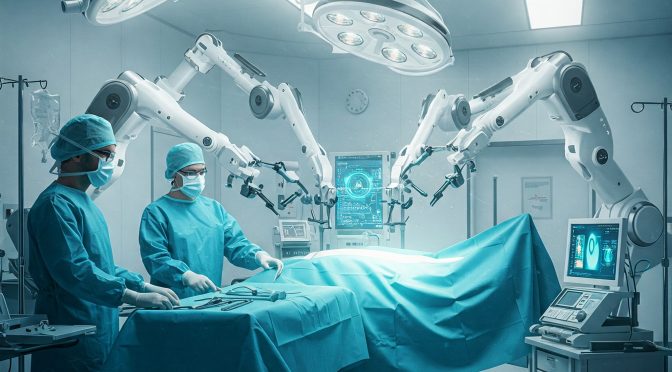
Robot-Assisted Surgery
Robotic-assisted surgery is another area where AI is making a significant impact. Robotic systems can perform complex surgical procedures with greater precision, dexterity, and control than human surgeons alone.
For example, robotic-assisted prostatectomies have been shown to reduce post-operative complications and improve patient outcomes. Similarly, robotic-assisted surgeries for lung cancer resections have improved patient survival rates and reduced morbidity.
Future Directions
As AI technology continues to evolve, we can expect to see even more innovative applications in healthcare. Some of the future directions include:
- Explainable AI : Developing AI systems that provide transparent and interpretable explanations for their decisions.
- Multi-disciplinary collaboration : Integrating AI with human expertise from various fields, including medicine, psychology, and social sciences.
- Patient-centered design : Designing AI-powered healthcare solutions that prioritize patient needs, preferences, and values.
Conclusion
The latest advancements in artificial intelligence are transforming the healthcare landscape in unprecedented ways. By leveraging predictive analytics, virtual assistants, imaging analysis, robot-assisted surgery, and other AI-powered technologies, healthcare providers can improve patient outcomes, streamline clinical workflows, and reduce costs.
As we move forward, it’s essential to prioritize transparency, explainability, multi-disciplinary collaboration, and patient-centered design in the development of AI-powered healthcare solutions. By doing so, we can harness the full potential of AI to create a more efficient, effective, and compassionate healthcare system for all.